




Wealth Watch: AI and the Tech Surge
AI and the Parabolic Tech Surge
By Peter Mullin
Written June 10, 2026
When the Iran War began, most investors expected a quick resolution. Now, 100 days later, the conflict drags on, yet the stock market—especially tech—staged a historic rally in May. Sometimes, when things seem dire, the market surprises us. But history tells us these tech surges are rare—only about five times in 30 years have we seen such gains—and the math behind May’s rally was shaky.
Goldman Sachs pointed out that May’s market moves have only been matched three times in recent decades—during the Tech Bubble. When the numbers get erratic and investors turn greedy, that’s often a signal to be cautious.
It’s amusing to watch tech companies add addictive, affirming features to AI models—history repeating itself in a new form.
Like asking, “Mirror (AI), on the wall, who’s the fairest of them all?”—and getting exactly the answer you want. We can use Grok, ChatGPT, or Google, but we should still verify.
For most people, “AI” is just the latest word for a search engine. There’s a temptation to trust what comes back—especially from new tools—but we must question and verify the results.
AI User: Is it ever possible for 1+1 to equal 4?
Reader: What do you think? I asked AI and made the math so.

Whether it’s a search engine, calculator, or AI, the output depends on the data we provide.
The genie is out of the bottle with AI. Computers that once filled rooms now sit in our hands, more powerful and sophisticated than ever.
Use AI—but always verify.
AI itself isn’t the bubble—overhyping the term is the real risk.
I don’t think AI is a bubble, but hype can create mini-bubbles. As investors, it’s easy to get swept up.
'AI' has joined 'innovative' on my list of overused words. If candy companies start touting AI to pick M&M colors and their stocks double, that to me is a sign of bubble behavior.
AI’s demand is fueling a boom in data centers. With vacancy rates under 2% (CBRE), don’t be surprised to see more massive data centers coming to suburbs and rural areas.
The Tech Bubble triggered a race to lay fiber-optic cable, which saw only 5% usage in 2000. Today, those networks are essential, but demand for both fiber and data centers is soaring thanks to AI. (Goldman Sachs)

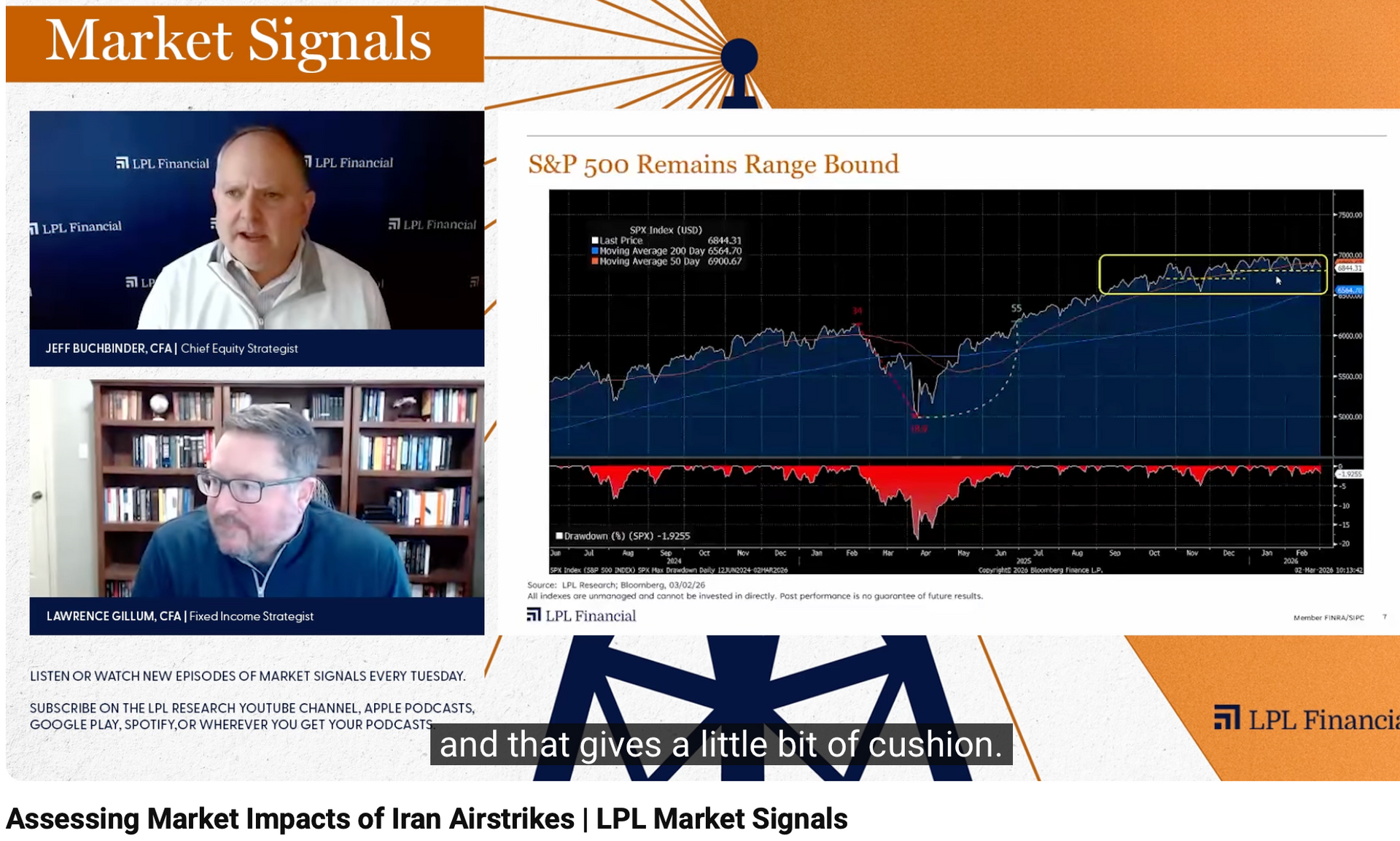
All this came to mind during the April lows through May’s parabolic 47% tech rally—followed by a swift 10-15% correction in early June. There is nothing new under the sun. (Yahoo Finance)
Calling for caution as hype ramped up turned out to be the right move.
Looking ahead, year-end seems neutral to positive.
Stock prices aren’t rising due to AI itself, but because they benefit from the AI narrative. In the end, fundamentals matter—companies not making money will see their stocks revert to the mean.
We’ll stick to the methods we believe work for our clients.
--------------------------
The opinions voiced in this material are for general information only and are not intended to provide specific advice or recommendations for any individual.
To determine which investment(s) may be appropriate for you, consult your financial advisor prior to investing.
Any company names noted herein are for educational purposes only and not an indication of trading intent or a solicitation of their products or services.
References to markets, asset classes, and sectors are generally regarding the corresponding
market index.
The Standard & Poor’s 500 Index (S&P500) is a capitalization-weighted index of 500 stocks
designed to measure performance of the broad domestic economy through changes in the
aggregate market value of 500 stocks representing all major industries.
Indexes are unmanaged statistical composites and cannot be invested into directly.
Index performance is not indicative of the performance of any investment and do not reflect
fees, expenses, or sales charges.
All performance referenced is historical and is no guarantee of future results.
No strategy assures success or protects against loss.
All indices are unmanaged and may not be invested into directly.
Securities and advisory services offered through LPL Financial, a registered investment advisor.
Member FINRA/SI
All investing involves risk including loss of principal. No strategy assures success or protects against loss. Past performance is no guarantee of future results.
Peter Mullin is a Registered Representative with LPL Financial.
Securities and Advisory Services offered through LPL Financial, a Registered Investment Advisor. Member FINRA/SIPC
- Mullin's take on the "4% Retirement Rule"
- Navigate "Bad Portfolio Weather"
- Tips to Optimize Social Security
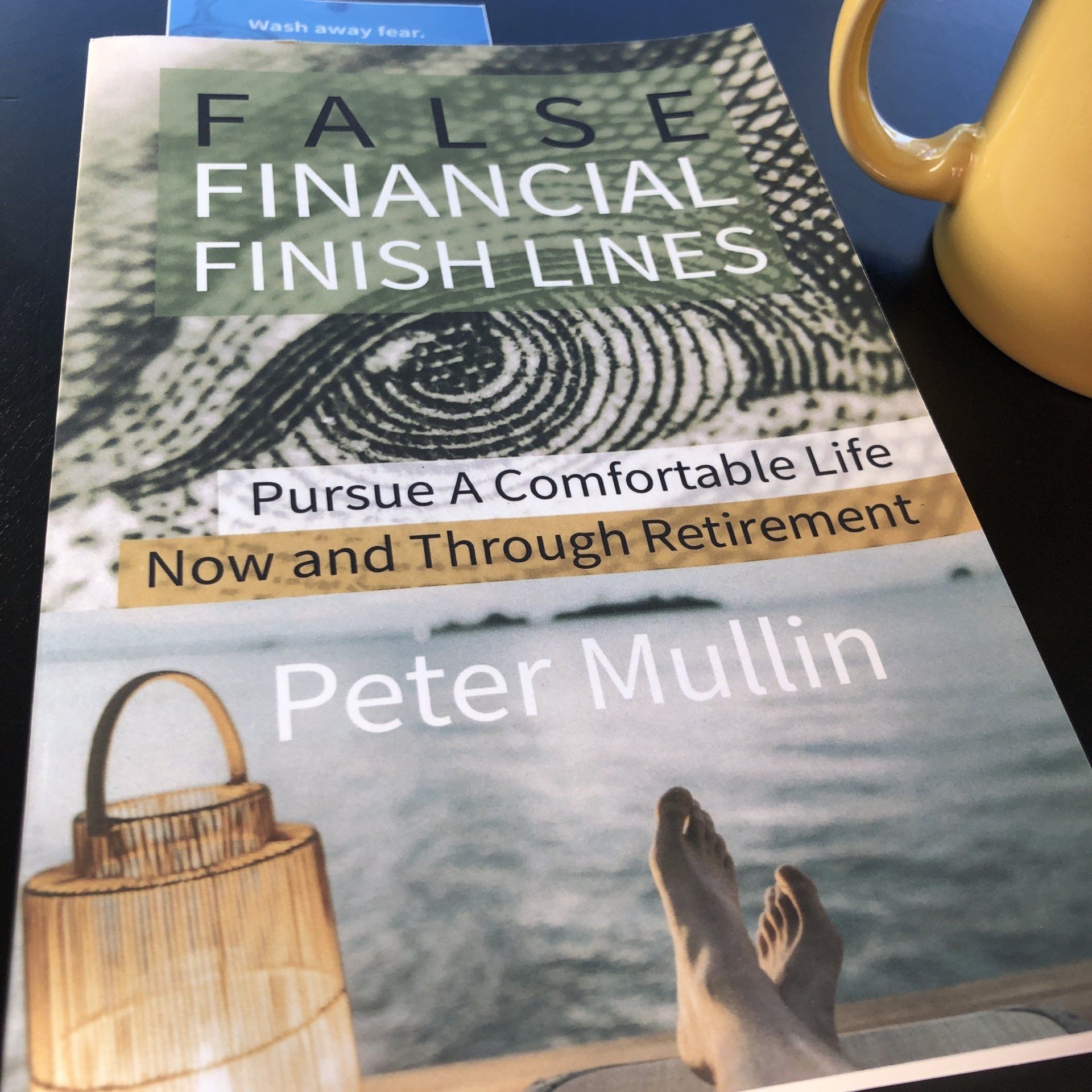






Articles and Assets
What are your Priorities?
Well it’s the end of the year. I just searched on Google for “market outlook 2018.” I came up with a little over 58-million “results.”
So should you be investing in stocks in 2018? The quick answer: It’s likely a prudent part of your portfolio. But it depends on your circumstances, right?
It’s apparently popular to throw your hat in the ring.
A mantra that you hear among disciplined professionals is to “stay the course.”
Then you hear “sell high, buy low.”
Who’s right?
The relief of a disciplined strategy is that it can be tailored to you. And tailor we think you should.
Yes, it’s possible that an investor may not utilize stocks in their portfolio at all. Or you may decide to go “all in” with a diversified stock portfolio.
(Side effects from tailoring a strategy may include increased confidence & persistence, apathy toward daily market reports, and increased focus on what really matters.)
Let’s begin with the “Why” of investing for you. Then you can request 15-minutes on the phone discuss your “how.”
So “Why Should You Invest”
Life changes and our “why” of investing ought to transform with life. Some invest for sport – they like the risk/reward of investing – they’re in it for the thrill. I don’t hang with this crowd.
Most of us ought to invest for things we want. Our money & our goals are serious. By investing in a diversified portfolio we can pursue things we want.
1. Living A Comfortable Retirement: Retirement is a noun. It’s up to you to really design and live a retirement that reflects you.
2. Purchasing a Home: Home is a place to live. It can take a down payment.
3. Passing an Inheritance on to Family:
4. Student Loan Shield: This idea is important for many Millennial graduates. Student loans can dominate your budget. But instead of accelerating those payments, what if you paid your required payments, and then invested the additional money that you were going to pay against your loan balance?
5. Emergency Reserves: You probably have read that it’s prudent to keep a relative healthy amount of cash in your checking/savings. Once you’ve achieved that, then you can consider investing additional funds. Go a step further and consider a non-retirement account for you and your house. You can spend this on cars, vacations or use it just as described in #4.
The Dow Jones has seen positive results, so far, in 2017. It’s unusual and sort of uncomfortable as the independent financial advisor. Why is it uncomfortable?
What would sting & linger longer? Finding $20 in the parking lot? Or finding a $20 parking fine on your windshield?
We’ve been finding a lot of metaphorical “$20’s” (i.e. “positive results”) in our portfolios this year. So the second we find a parking fine (or a few in a row) we’ll be sure to ask if stocks are still the right place to park our money.
Complacency can work against us, Dear Clients. Just keep recalling your long-haul strategy and your “why” of investing.
***
Peter Mullin is an independent financial advisor registered through LPL Financial. He lives in Rogers, MN with his family. He was born and raised in St. Cloud, MN. Mullin Wealth Management is located in Waite Park, MN.
The opinions voiced in this material are for general information only and are not intended to provide specific advice or recommendations for any individual.
Investing involves risk including loss of principal.
There is no guarantee that a diversified portfolio will enhance overall returns or outperform a non-diversified portfolio. Diversification does not protect against market risk.
All performance referenced is historical and is no guarantee of future results.
All indices are unmanaged and may not be invested into directly. No strategy assures success or protects against loss.