




Market Update: Navigating Uncertain Times — A Note for Clients
Market Update: Navigating Uncertain Times — A Note for Clients
As we pass the 60-day mark since the onset of the war with Iran, I want to reach out to each of you— entrepreneurs, retirees, and young professionals alike—to provide both perspective and reassurance during these volatile times. Whether you’re enjoying your retirement years or balancing careers and family, the ongoing headlines and market swings can feel overwhelming. Let’s take a measured look at where we stand.
I tend to write when the headlines are either overwhelmingly positive or deeply concerning. My goal isn’t to contribute to the noise of good news or bad news, but rather to offer perspective when it matters most. Of course, you’re always welcome to connect with me whenever life takes a turn—those personal milestones and changes are truly the moments where thoughtful planning can make all the difference.
Since my last update, when the conflict had just begun, many aspects of the market have shifted—though not all in the same direction. Semiconductor stocks have become the latest sector to experience hyperbolic growth, echoing the surge we saw in silver earlier this year. I coined the term “locker room indicator” when I overheard so many talking about silver at the gym. It turns out this indicator was fair. While it can feel thrilling to shoot a long elevator chute, the fall can be panic-inducing if the brakes fail. Or so I imagine.
*Portfolio Insights: When high-octane insights work in our favor we trim or remove those positions. Usually, high-octane concepts come in small doses as far as portfolios are constructed. Even if they have been held short-term. I find it prudent to try and avoid a potentially big loss, rather than hang in there for just 10% more.
Meanwhile, oil prices remain elevated, hovering around $90-100 per barrel. This continues to directly impact consumers, with gas prices climbing above $4.25 per gallon (Minnesota) —a strain acutely felt at the pump.
Today’s inflation data came in hot, at 3.8%, a reading that runs contrary to the Federal Reserve’s goals (Bureau of Labor Statistics). For both retirees on fixed incomes and young families managing monthly expenses, this uptick in inflation underscores the importance of maintaining a diversified investment approach and prudent budgeting.
The volatility we’ve seen over the past 18 months remains atypical by historical standards. Yet, if you’ve been tracking the market closely – and I have – there is a silver lining: the market, despite its ups and downs, is above trend for positive days.
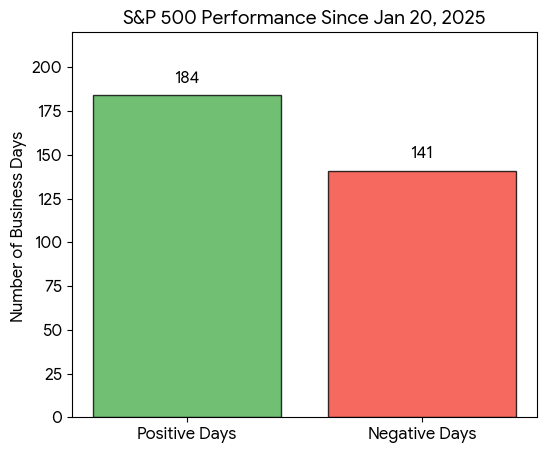
Since President Trump’s second inauguration on January 20, 2025, the S&P 500 has risen nearly 20% as of May 11, 2026. To put it in perspective, there have been 184 positive business days and 141 negative business days for the S&P 500 during this period (Yahoo Finance).
History reminds us that markets are resilient, even amid conflict and uncertainty. While headlines may drive short-term anxiety, staying focused on long-term goals, maintaining a diversified portfolio, and avoiding reactionary decisions have served investors well across generations.
Please know I am closely monitoring these developments and am always available to discuss your specific situation, whether you’re planning for retirement, saving for your children’s future, or simply seeking peace of mind during turbulent times.
Stay steady, stay informed, and let’s continue this journey with perspective and purpose.
###
The opinions voiced in this material are for general information only and are not intended to provide specific advice or recommendations for any individual.
Any economic forecasts set forth may not develop as predicted and are subject to change.
Investing involves risk including loss of principal.
References to markets, asset classes, and sectors are generally regarding the corresponding market index.
The Standard & Poor’s 500 Index (S&P500) is a capitalization-weighted index of 500 stocks designed to measure performance of the broad domestic economy through changes in the aggregate market value of 500 stocks representing all major industries.
Precious metal investing involves greater fluctuation and potential for losses.
Indexes are unmanaged statistical composites and cannot be invested into directly.
Index performance is not indicative of the performance of any investment and do not reflect fees, expenses, or sales charges.
All performance referenced is historical and is no guarantee of future results.
No strategy assures success or protects against loss.
All indices are unmanaged and may not be invested into directly.
Securities and advisory services offered through LPL Financial, a registered investment advisor. Member FINRA/SIPC.
- Mullin's take on the "4% Retirement Rule"
- Navigate "Bad Portfolio Weather"
- Tips to Optimize Social Security
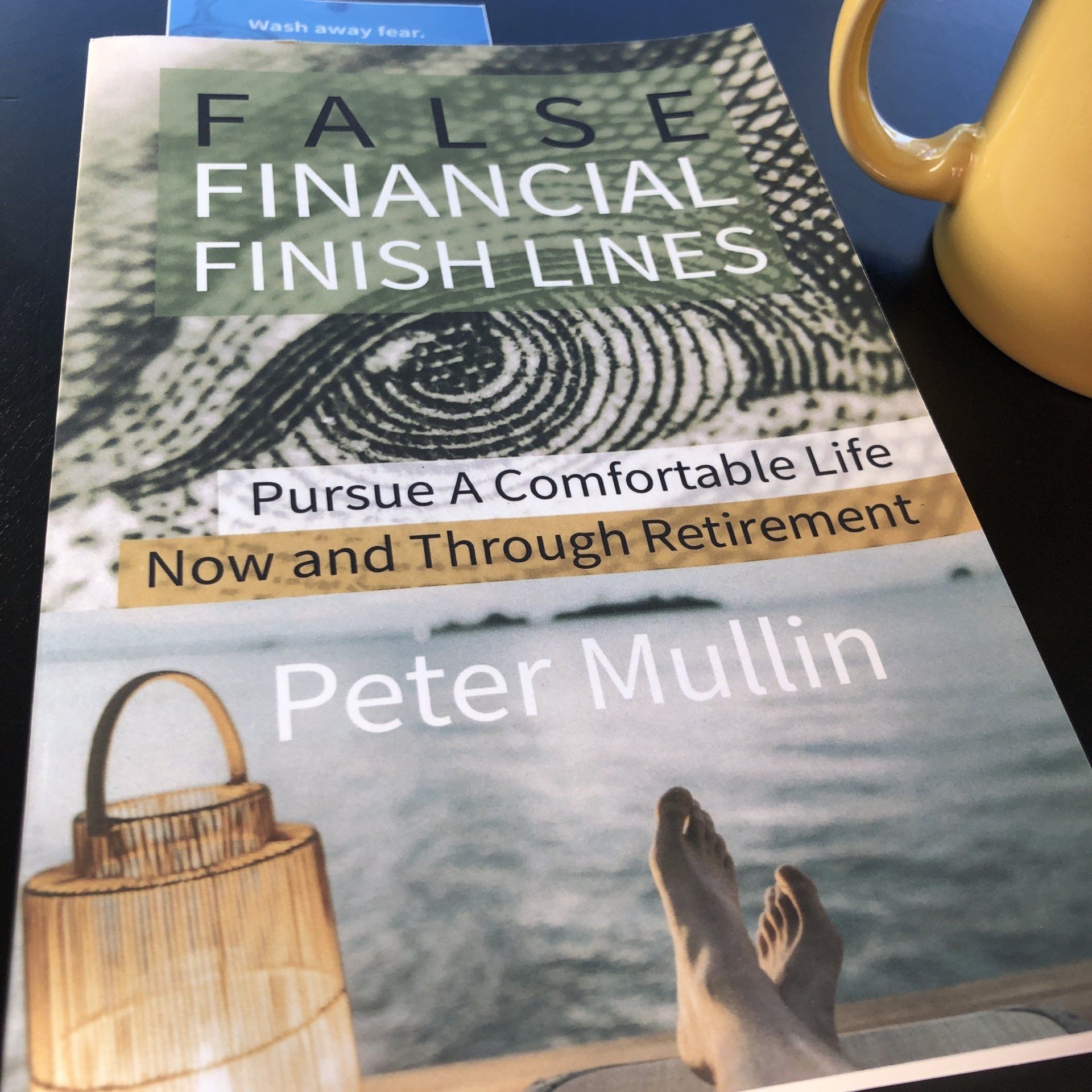
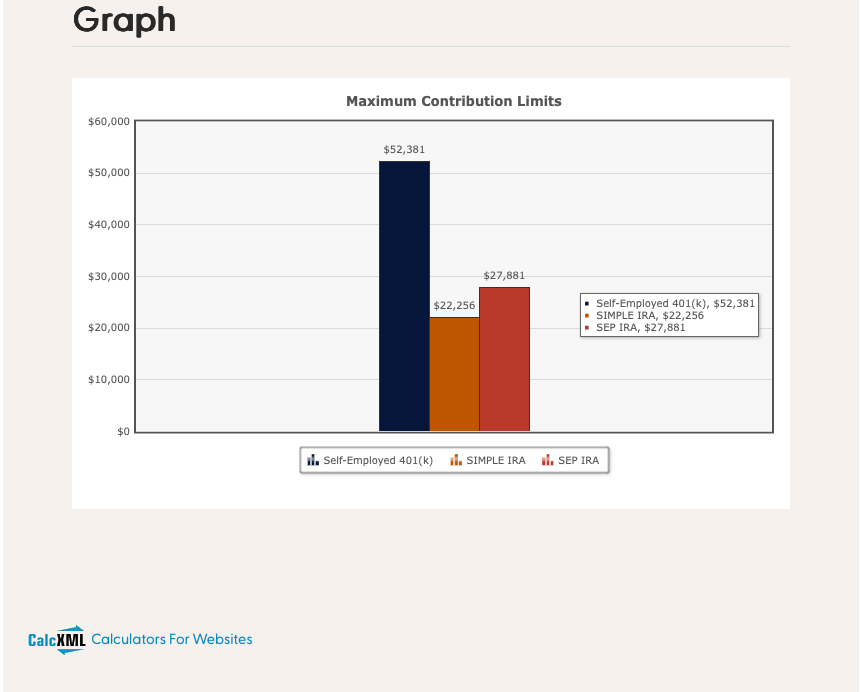




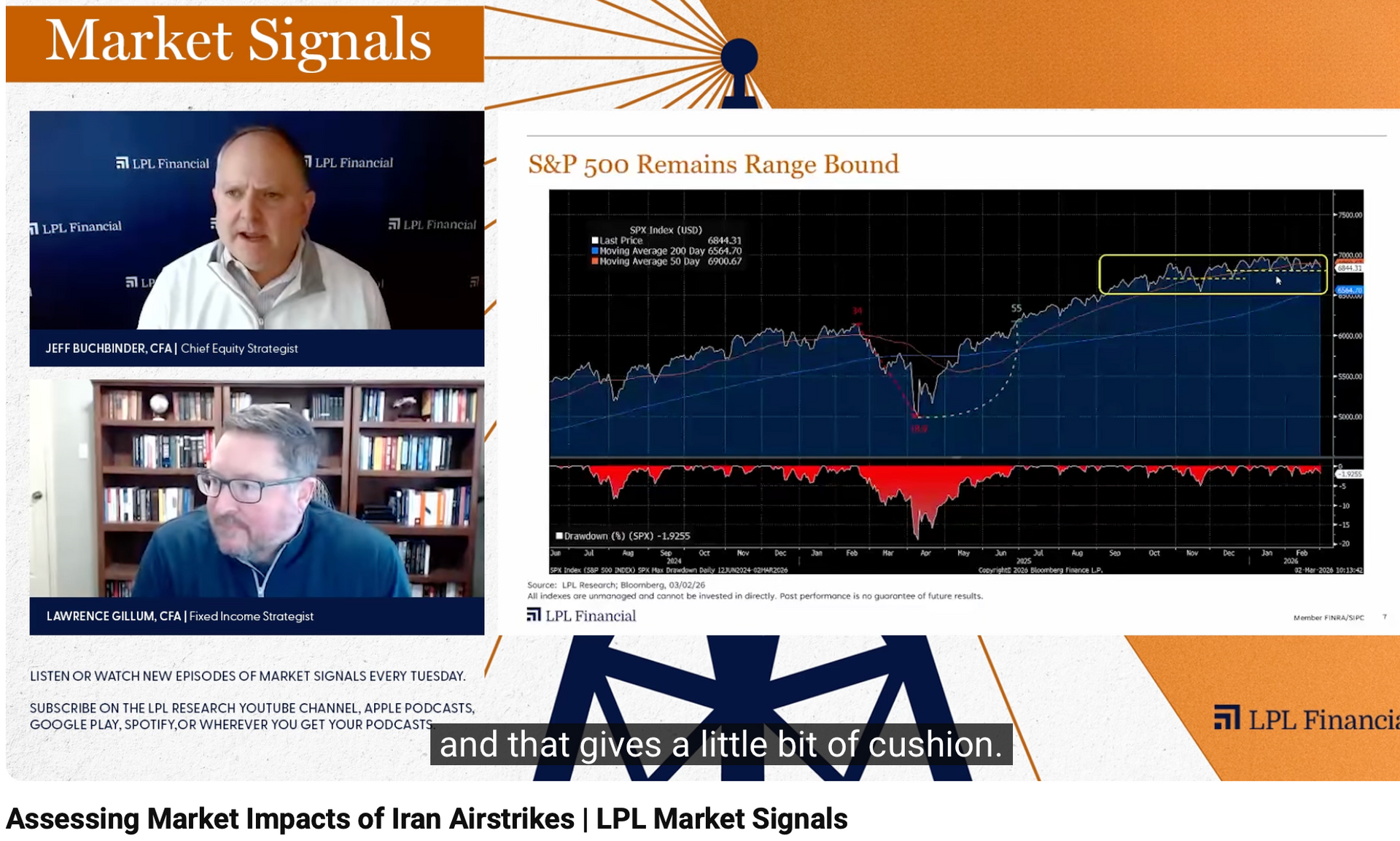


Articles and Assets
What are your Priorities?
Well it’s the end of the year. I just searched on Google for “market outlook 2018.” I came up with a little over 58-million “results.”
So should you be investing in stocks in 2018? The quick answer: It’s likely a prudent part of your portfolio. But it depends on your circumstances, right?
It’s apparently popular to throw your hat in the ring.
A mantra that you hear among disciplined professionals is to “stay the course.”
Then you hear “sell high, buy low.”
Who’s right?
The relief of a disciplined strategy is that it can be tailored to you. And tailor we think you should.
Yes, it’s possible that an investor may not utilize stocks in their portfolio at all. Or you may decide to go “all in” with a diversified stock portfolio.
(Side effects from tailoring a strategy may include increased confidence & persistence, apathy toward daily market reports, and increased focus on what really matters.)
Let’s begin with the “Why” of investing for you. Then you can request 15-minutes on the phone discuss your “how.”
So “Why Should You Invest”
Life changes and our “why” of investing ought to transform with life. Some invest for sport – they like the risk/reward of investing – they’re in it for the thrill. I don’t hang with this crowd.
Most of us ought to invest for things we want. Our money & our goals are serious. By investing in a diversified portfolio we can pursue things we want.
1. Living A Comfortable Retirement: Retirement is a noun. It’s up to you to really design and live a retirement that reflects you.
2. Purchasing a Home: Home is a place to live. It can take a down payment.
3. Passing an Inheritance on to Family:
4. Student Loan Shield: This idea is important for many Millennial graduates. Student loans can dominate your budget. But instead of accelerating those payments, what if you paid your required payments, and then invested the additional money that you were going to pay against your loan balance?
5. Emergency Reserves: You probably have read that it’s prudent to keep a relative healthy amount of cash in your checking/savings. Once you’ve achieved that, then you can consider investing additional funds. Go a step further and consider a non-retirement account for you and your house. You can spend this on cars, vacations or use it just as described in #4.
The Dow Jones has seen positive results, so far, in 2017. It’s unusual and sort of uncomfortable as the independent financial advisor. Why is it uncomfortable?
What would sting & linger longer? Finding $20 in the parking lot? Or finding a $20 parking fine on your windshield?
We’ve been finding a lot of metaphorical “$20’s” (i.e. “positive results”) in our portfolios this year. So the second we find a parking fine (or a few in a row) we’ll be sure to ask if stocks are still the right place to park our money.
Complacency can work against us, Dear Clients. Just keep recalling your long-haul strategy and your “why” of investing.
***
Peter Mullin is an independent financial advisor registered through LPL Financial. He lives in Rogers, MN with his family. He was born and raised in St. Cloud, MN. Mullin Wealth Management is located in Waite Park, MN.
The opinions voiced in this material are for general information only and are not intended to provide specific advice or recommendations for any individual.
Investing involves risk including loss of principal.
There is no guarantee that a diversified portfolio will enhance overall returns or outperform a non-diversified portfolio. Diversification does not protect against market risk.
All performance referenced is historical and is no guarantee of future results.
All indices are unmanaged and may not be invested into directly. No strategy assures success or protects against loss.